 English
 Svenska
From climate targets to customer value
Climate targets can feel abstract. For our customers, they should not. Instead, they should show up right there on the factory floor, in energy bills, in reporting demands, and in the risk of falling behind. At Mycronic, we believe that energy efficiency and renewable electricity create value for our customers and therefore represent long-term competitive advantages for our company.

Progress on Mycronic’s science-based climate targets
In 2025, we exceeded our science-based Scope 1 and 2 emissions reduction target for energy use in facilities and made some progress on reducing emissions related to the use of sold products (Scope 3), the area where our climate impact is the largest.
What does this progress mean in practice and why does it matter for customers?
To put the development into context, we spoke with Kristina Svanteson, Sustainability Manager at Mycronic, about how energy efficiency and renewable energy are linked to customer value, long-term competitiveness, and risk reduction.
Why is product energy efficiency such a central part of this work?
“A big part of our climate impact happens when our machines are used at customer sites,” Svanteson explains. “Improving our products’ energy efficiency is not just good for Mycronic but clearly benefits our customers as well.”
According to the recent progress update on Mycronic’s climate targets, emissions from the use of sold products represent the company’s largest source of emissions. While absolute emissions have increased as business has grown, emissions relative to gross profit have decreased in the past years, partly thanks to energy efficiency improvements in several product families.
More energy-efficient machines use less electricity per produced unit over very long equipment lifetimes, which directly affects customers’ operating costs and exposure to energy price volatility.
“A good example is our mask writers with solid‑state lasers,” Svanteson says. “They are significantly more energy efficient than earlier generations and gas‑laser alternatives, helping customers reduce both electricity use and Scope 2 emissions.”
How does this translate into long-term value for customers?
Energy efficiency is not only about cost savings in the short term. For Mycronic’s customers, equipment investments are often made with time horizons spanning decades.
“We integrate sustainable thinking into R&D and product development to make sure our equipment stays competitive as climate and energy requirements tighten”, Svanteson says. “That reduces the risk of asset obsolescence and helps customers invest in solutions that remain relevant and compliant over long periods of use.”
Mycronic has also transitioned to renewable energy. Why does this matter externally?
In the reported period, Mycronic increased its share of purchased renewable electricity substantially, a key driver behind exceeding the Scope 1 and 2 emissions reduction targets.
Asking Svanteson, this is also a question of stability and trust:
“Our own transition away from fossil fuels signals long‑term stability,” she explains. “Suppliers that depend heavily on fossil energy face higher risks from price shocks, disruptions, and regulation. Our energy strategy can increase customers’ trust in us, especially in a more uncertain geopolitical and energy landscape.”
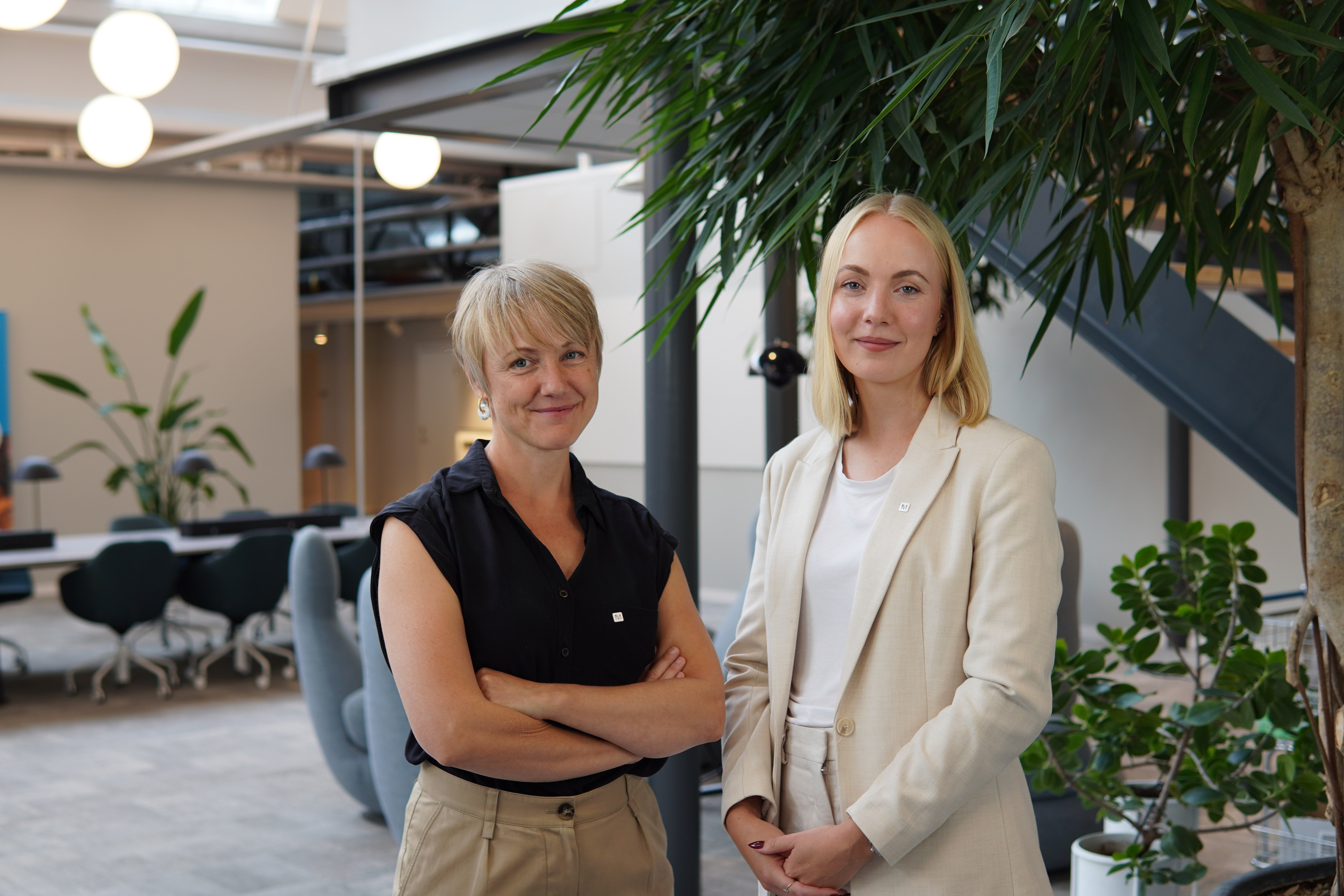
Kristina Svanteson, Sustainability Manager (left) with Sara Mårtenson, Senior Sustainability Specialist (right)
How does this support customers’ own climate commitments?
Today, many global electronics brands and semiconductor manufacturers are required to report emissions across their value chains and demonstrate continuous improvements.
“Mycronic’s customers are increasingly asked by their own customers to report emissions and how they work with suppliers to reduce climate impact,” Svanteson says. “By choosing Mycronic, they both get equipment and a supplier that already aligns with these expectations.”
This makes it easier for customers to progress toward their own climate targets without compromising performance, productivity, or long-term investment security.
It is not just a standalone sustainability initiative
While Mycronic has already exceeded one of its climate targets, work remains to reach the other - so the journey is not finished. Maintaining low emission levels while the business grows remains a key focus toward 2030.
Read more about our sustainability work in our Annual Report: https://www.mycronic.com/investors/financial-reports/